
Features of the ProxyMesh Rotating Proxy Service
ProxyMesh has many features depending on your needs. While some features are only available on higher level plans, we make sure every customer gets the essential benefits of our service: anonymity, speed, reliablity, simplicity, and affordability.
🌐 For Individuals
- Proxy auto config URL for web browsers
- Documention for configuring proxy settings in different browsers
- Simple IP authentication
💼 For Businesses
- Invoice customization
- Sub accounts for teams or clients
- Prepay for a discount
- Prepaid bandwidth for high volume usage
⚙️ For Developers
- API
- Custom headers to control IP addresses
- HTTP Client library example documentation
- Domain authentication for Dynamic DNS
- Pass-through Authentication header
🗺 For Everyone
- Many proxy locations to choose from
- 24/7 chat and email support with real humans
- Automatic proxy rotation and random IP selection
- Configurable bandwidth limits
- 2-factor authentication
How the ProxyMesh HTTP Proxy Server Works
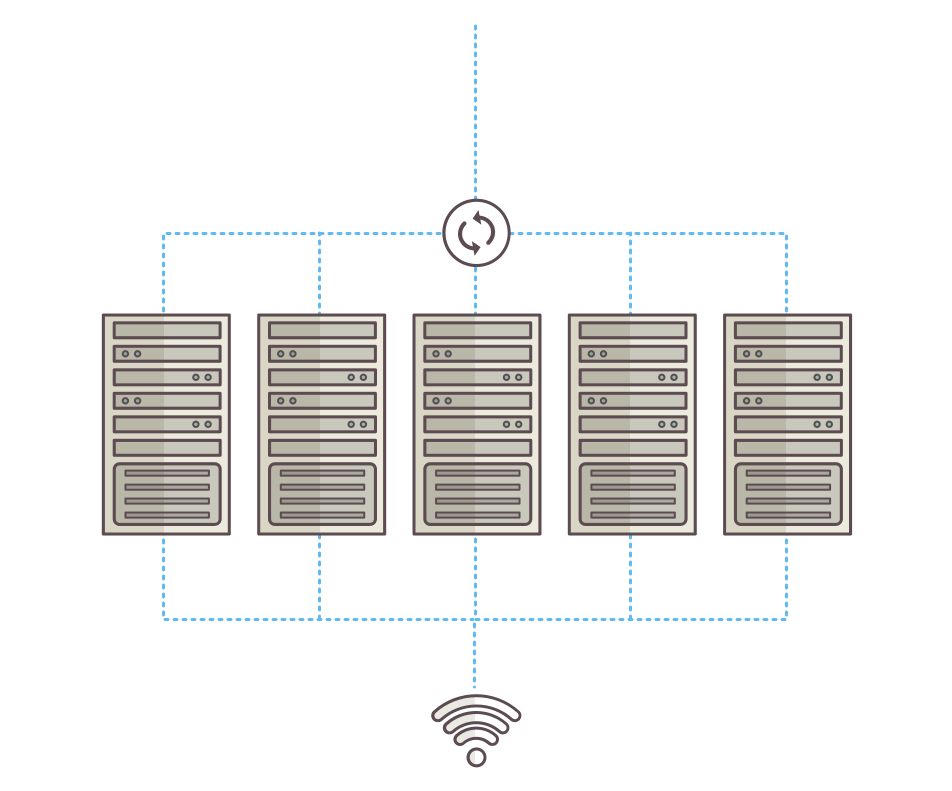
ProxyMesh is somewhat similar to Tor, but much simpler. Instead of routing your requests through many distributed nodes, ProxyMesh routing is much flatter and therefore faster, with only 2 hops between you and your destination. Here's a step-by-step breakdown of how it works:
- You configure your HTTP client to use the ProxyMesh proxy server
- Your client makes a HTTP request to the ProxyMesh proxy server
- The proxymesh proxy server randomly chooses one of its many forward proxy servers, and routes your request through that proxy server
- The forward proxy server sends your request to its destination and receives the response
- Finally, that response is routed back to your client
In this way, every request goes through a random IP address choosen from among the current pool of IP addresses assigned to forward proxy servers. This pool periodically changes, when new proxy servers are added, and old proxy servers are removed, thus changing IP addresses periodically. With rotating IP addresses, IP bans and rate limiting will be a thing of the past.
🏎 Speed
ProxyMesh is fast because the ProxyMesh proxy server and the forward proxy servers are in the same private network, ensuring very fast proxy server to proxy server communication. Plus, the forward proxy servers optimize requests for caching and compression, so the only thing slowing you down will be the destination server.
💪 Reliability
ProxyMesh is reliable because the forward proxy servers are run by us, for profit, so there is a very clear incentive to keep the proxy servers online and operational. Unlike an open proxy, the ProxyMesh proxies can only be accessed by authenticated users, the forward proxy servers can only be accessed by the ProxyMesh proxy, and the ProxyMesh proxy won't go down randomly, never to return.
ProxyMesh Proxy Server Locations
In addition to our 17 data center proxies, we also operate 3 unique proxy servers. Learn about the differences below...
☁️ Data center proxies
ProxyMesh currently operates 17 data center proxy servers, each of which has 10 IPs that change twice per day. IP rotation times are staggered, so each location rotates IPs a different time of day. The number of proxy locations you get access to depends on which plan you select, and you can change your proxy access at any time.
🇺🇸 US ISP Proxy Server
ProxyMesh provides a US ISP proxy server with 10 residential & mobile IPs at a time, taken from a much larger pool of IP addresses. These IPs rotate once per day. The US ISP proxy server is available on the ProxyMesh 50 plan and higher.
🌏 World Proxy Server
ProxyMesh also provides a world proxy server with 25,000 IPs around the world. These IPs do not rotate regularly, and they are chosen for each request based on a least recently used algorithm. The world proxy server is available on the ProxyMesh 50 plan and higher.
🔓 Open Proxy Server
Every plan gets access to a open proxy server that has anywhere from 200 - 1000 open proxy IPs. Thousands of open proxy IPs are collected and tested every 15 mintues, and only the hundreds that pass the tests are kept, resulting in about 100 IPs changing every 15 minutes. This open proxy server provides great IP variety, but these IPs are slower and more error prone.
For more information, take a look at our FAQ or contact us with any questions you have. You can also try out our free anonymous web proxy.